Thursday, 1 August 2019

Mexican Vultures and Jam Sauce

It may be the gin talking, but I don’t think I have ever seen more spectacular stars than those I am staring at right now.

Maybe New Year in Wanaka a few years ago came close, but I don’t think I’ve ever seen the Milky Way look as clear as it does right now. And just ‘above’ it, Jupiter glowing with a fierce orange intensity. 

Maybe it’s the lack of light pollution or that the air is so much clearer but it’s amazing to be able to make out both Jupiter and Saturn. It’s almost as if I could reach out and touch them. Except it’s impossible to even travel there.

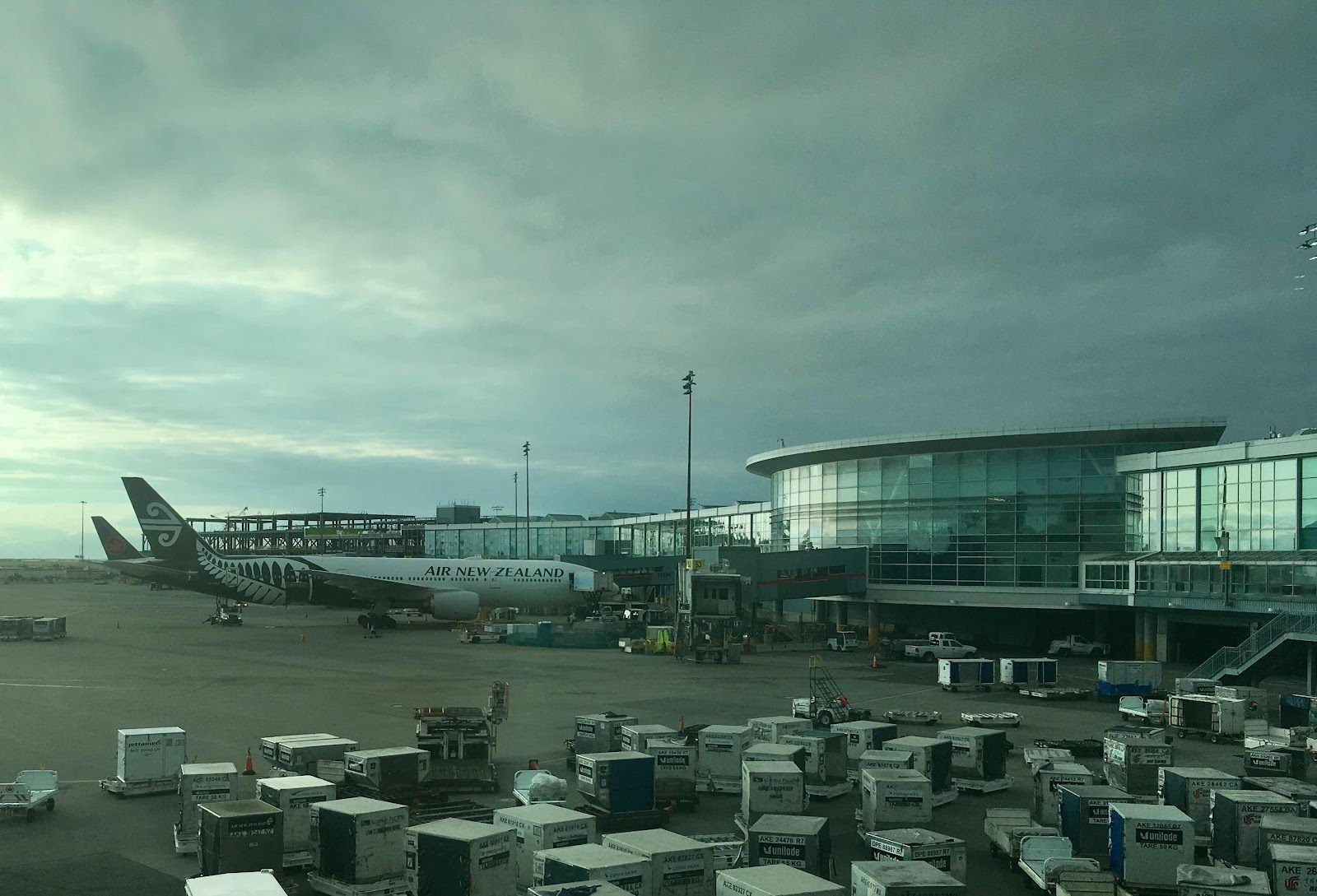
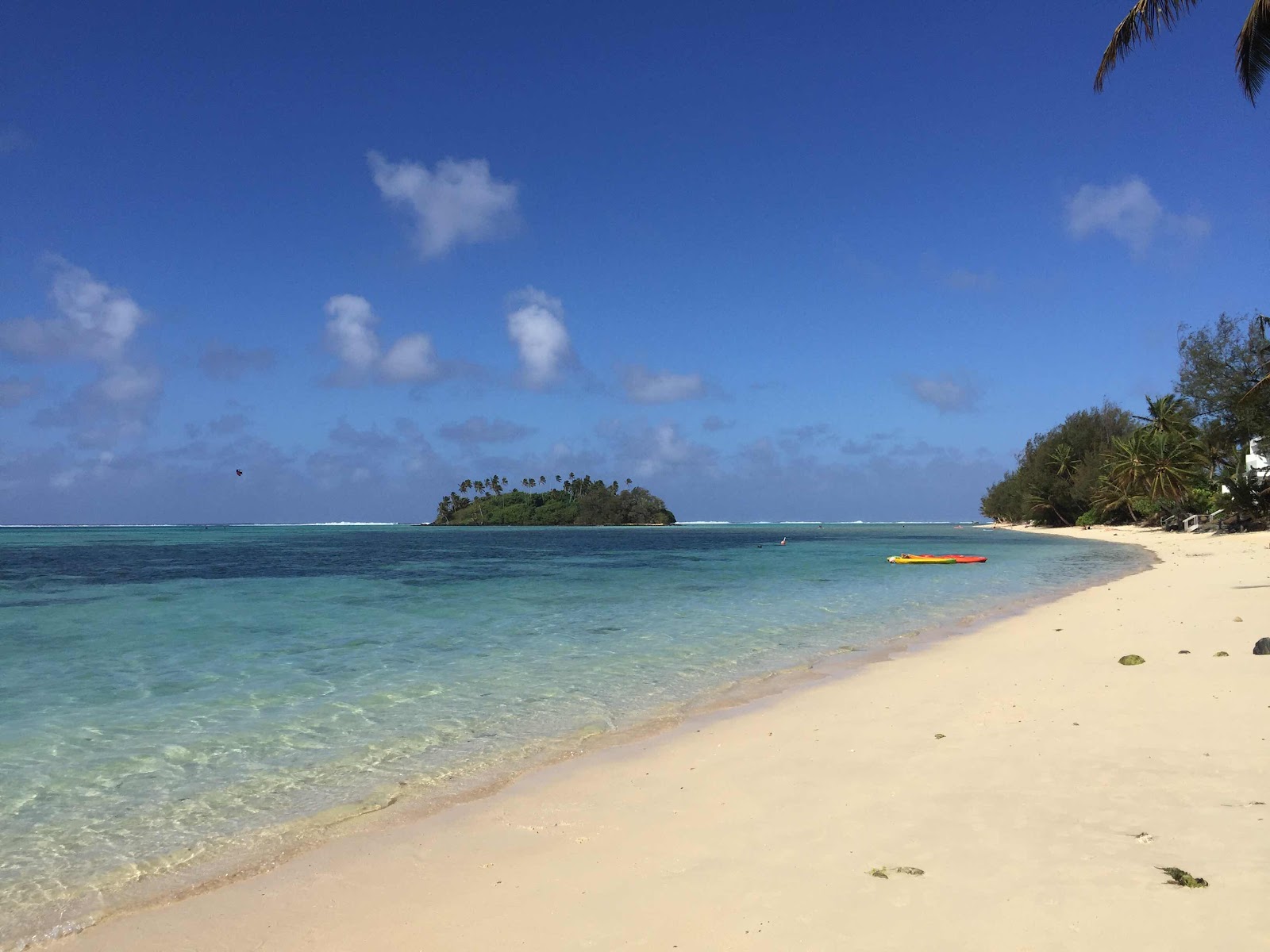
I suppose it’s quite apt to be staring out into the vastness if space and marvelling at the huge distances between the planets, whilst lying on a tropical island surrounded by the huge Southern Pacific Ocean. It’s almost poetically parallel.

At least we only have a four hour plane ride to get us back to Auckland. A trip to our nearest celestial neighbour would take considerably longer than that and I doubt there’d be enough complimentary Sauvignon Blanc to get us through the journey.

And, without warning, I’m suddenly reminded about a poster we had in our downstairs loo in our house in Leeds. It’s text Mexican Vultures Enjoy Making Jam Sauce Using NewPlums taking the centre stage. “What now?” I hear you ask.

If you ever find yourself in need to recall the order of the planets in our solar system then that’s all you need to remember.

Mexican = Mercury
Vultures = Venus 
Enjoy = Earth
Making = Mars
Jam = Jupiter 
Sauce = Saturn
Using = Uranus
New = Neptune
Plums = Pluto

Simple and you can’t go wrong. That is until they find another planet tucked away or Pluto loses its status as a planet. In which case you’re on your own. 

Right enough of glazing into space - I’ll leave that for next week when I’m back in work. For the time being there’s a much more pressing time and space conundrum to resolve. The three hour Happy Hour is about to end and there’s a jug of Cook Island lager with our names on it.....

Monday, 29 July 2019

Notes from a Very Small Island

For most people, when asked about the size of a country, think about the land mass. Land is, after all, what makes a place habitable. But to solely focus on terra firma is to miss out on whole other parts of a nation. For example, what would New Zealand be without its coastline, lakes, lagoons and rivers? 

Similarly, what would the UK be like if it were land locked? Okay, so it wouldn’t have neighbours across the channel to whinge about but it would be a totally different place without its fishing ports, seaside towns, fish and chips and kiss-me-quick hats and candyfloss. 

So, with that in mind, it would be easy to dismiss Rarotonga as a small island, and The Cook Islands as a tiny nation. In land mass terms, perhaps that would be an accurate description, but a glance at the bigger picture tells a totally different story.

Whilst The Cook Islands 15 individual land masses combined cover a little under 240 square kilometres, the total area is a whopping 1,800,000 square kilometres.

Given that the distances between the land masses are huge, it’s does lead one to wonder how on earth the 17,000 inhabitants actually manage to  hold it all together as a nation. Things citizens of other countries take for granted, such as a coherent transport system, communications and financial system must take on a whole new dimension. And how on earth do football teams fulfil their away fixtures? 

We’re spending the next five days in Rarotonga so I’m sure we’ll find out. 


Sunday, 7 July 2019

The Chai Latte Incident

The criticism that Auckanders get from the rest of New Zealand is quite frankly unwarranted. Or at least it is most of the time. In our defence, it’s not our fault. Not really. We’re just misunderstood. And to be fair, most of the time it doesn’t really matter. So happy are we in our metropolitan bubble that the outside world, you know the one to the south of the Bombays and beyond the Brynderwyns can do what it likes as long as we don’t need to worry about it. Or heaven forbid, deal with it. Think that’s unfair? Well deal with it! Unfortunately , on occasion, Auckland and the outside world interacts enough to cause us to pause momentarily and look up. Thankfully for both parties it’s fleeting and gone in a puff of realism. 

Fortunately for the rest of New Zealand we keep ourselves to ourselves. Well mostly anyway. There are some occasions where a journey outside the Greater Auckland region is necessary. Compulsory even, especially if your employer is paying. Which rather neatly, brings me onto the subject of this blog. See got there in the end....

As part of a wider study - yes one that went beyond Auckland - a colleague and I were tasked with driving around Northland. Northland, for those not in the know is the part of the North Island that extends beyond Auckland. The land to the north if you like. Quite an apt title really. Just like Southland which is....well you can guess.

Inevitably, after a few hours driving, the need to consume caffeine overtook me so we stopped at the next available spot. And, as we were actually surveying rest areas for weary travellers, it would’ve been a dereliction of duty not to. 

As we pulled off the main highway and into the quiet town street we started to wonder if there was even a café in this town. There was a butchers, a bakers and probably a candlestick manufacturer but where was the coffee shop? Surely we couldn’t have landed on the only settlement in New Zeland without a coffee shop? Surely not? With a population of around 5m, 1.6m of which live in Auckland, small town New Zealand is particularly small - but even the smallest of townships has a spot serving decent coffee. Then, just visible between the swipes of the wiper blades and blobs of rain we spotted it. Disaster averted.

Whilst I went to inspect the town’s toilets - another work task I was all too eager to compete - my colleague went into the coffee stop. Thankfully the toilets were fully functional and, duly noted such for my employer, I returned the main street and stepped into the café. My colleague had already ordered and was waiting patiently for her hot beverage to be delivered. 

I put my keep-cup on the counter top and asked for the usual. 

A long black with trim milk please

Yes I know it’s not a very exotic order and rather old fashioned amongst the moccas, flat whites and cappuccinos of the world, especially in a coffee obsessed country such as New Zealand, but I like the unfussiness of it all. Plus it’s hard to get wrong.

You’re another one!” came the rather unexpected response, “we do have cups of our own you know!”

Just doing my bit for the planet,” I added helpfully, or so I thought.

Before we go any further I’d like, in the interests of full disclosure, to note that  “just doing my bit for the planet” didn’t extend to not driving around the countryside all day in a large SUV. But every bit counts doesn’t it? Well it was going to have to - driving around rural Northland in anything smaller than the equivalent of a Sherman Tank with comfortable seating was not going to happen. 

Anyway, I was about to exchange further pleasantries when the host pointed to the barista in the corner of the room and nodded to suggest that he would be providing me with my coffee presently. I acknowledged that I understood and wandered over, keep-cup outstretched....

Here you go,” he noted as he handed me a hot cup of coffee in a paper cup. And not in my carefully considered, environmentally friendly reusable cup. I looked the barista in the eye with a slight air of confusion.

Feel free to pour it into your own cup,” he suggested before helpfully adding “and there are bins outside” somewhat missing the point.

The same happened to me,” my colleague reported as I sat next to her on a bench looking out towards the empty, rain-soaked town street and then added “At least you got what you wanted.

Evidently this town hasn’t yet embraced the delicious delights of a Chai Latte, the Auckland influence seemingly stopping somewhere south of the Brynderwyns. It turns out that my colleague has wanderered up to the counter and without so much of a glance at the drinks menu on the wall asked for her usual. I wasn’t there to witness the exchange but one can imagine it went something like this;

A chai latte with almond milk please” 

A what?” 

Err a chai latte?” 

We don’t do them, whatever they are”

“What do you have that’s similar”

“Only what’s on the board”

“Oh, what do you have that doesn’t have dairy in it?

Black tea.......or black coffee”

Oh....don’t you have almond mi.......never mind. Black tea please

“.....what’s this?”

It’s my keep-cup......you know to save on paper cups....

No doubt the host muttered something about f*ing Aucklanders under her breath as she turned to enter the sale into the register.

Okay, we should’ve known better - and maybe checked out the menu before assuming. But how were we to know that Chai Latte hadn’t reached rural Northland? They’re everywhere in Auckland! And so there you have it, another nail in the credibility of the argument that Auckland’s is just like the rest of New Zealand. 

Jaffas anyone?


Sunday, 2 June 2019

A Moving Experience

I think I’m on fairly solid ground when I say that Wednesday 29 May 2019 was the most expensive lunchtime shopping trip I’ve ever experienced. I do recall one time, when I was but the office junior, being sent out for milk and coming back with a mountain bike. A pretty expensive diversion from lactose-based errands I’m sure you’ll agree. But I’ve never actually bought a house on such a trip. At least I don’t think so. Surely I would’ve remembered?

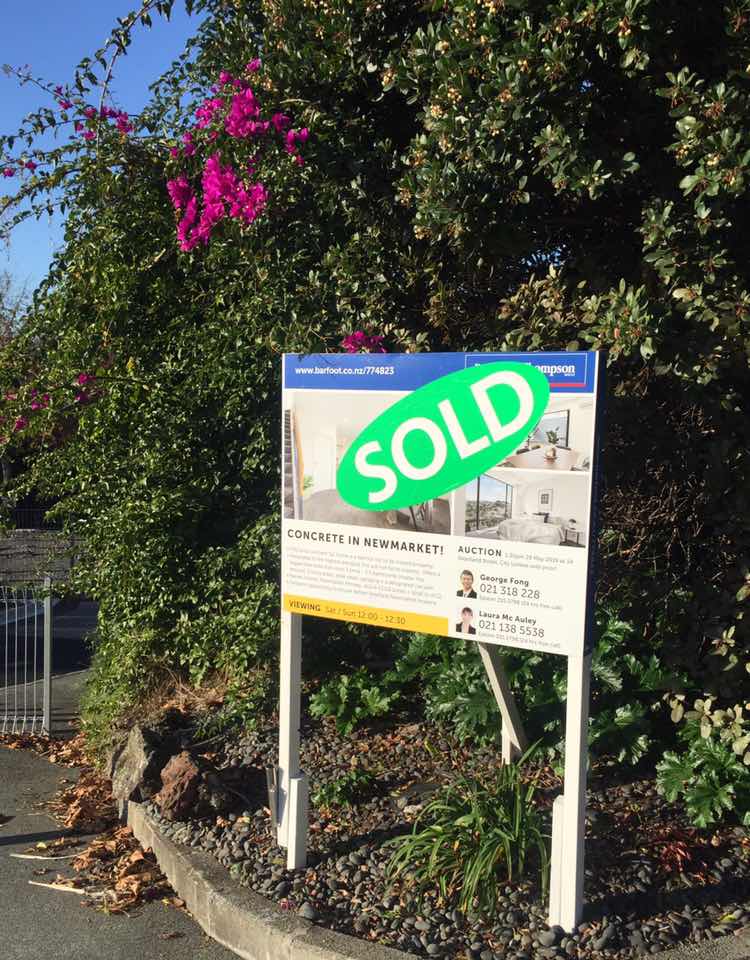
Quite how we ended up at a house auction on a sunny Wednesday lunchtime is up for debate but I rather think it went something like this;

Guess how much money we’ve spent on rent since we arrived in New Zealand?

I was a simple enough question but the answer to which we’d never really considered until now. And it was startling. Not quite enough to fund a small country but enough to make us wince in pain. Was it really that much? Had we really financed someone else’s lifestyle to that degree? A quick, rough calculation was enough to confirm that it was certainly in the right ballpark. 

That’s not to say that we hadn’t benefited from the arrangements. We have, for the past four years or so, lived in a really nice suburb and had a home with great views and plenty of space. Add to that, we have been able to walk pretty much everywhere and we’re a stones throw from the beach, parks, shops and entertainment. Yet, despite the conveniences of our current location, it was time to dip our toes in the proverbial housing market. Not, you must understand, to buy but just to look. Have a gander. A good old nosey. Well once thing led to another and as quick as you could say “How much!!?!!” we now find ourselves in the odd position of owning two houses.  Well how did we get here? Pull up a chair and I’ll tell you all about buying a house in New Zealand.....

Open Sesame....Street

And so it was that our weekends were no longer as free as they used to be. Rather than galavanting wherever we chose, we spent our weekend attending Open Homes. “Open what?” I hear you mutter. Well in New Zealand rather than be at the whim of a would be buyer, having to drop everything whilst they visit your home and poke around, you simple open up your home for thirty minutes each Saturday or Sunday whilst the hordes descend. Or at least that’s the hope. During those thirty minutes, the estate agents are on hand to handle the  crowds whilst you pop out for a coffee. Quite elegant when you think about it and certainly explains the popularity of coffee houses on most New Zealand town streets. 

So that was us. Find a few places worth seeing, work out a route and off we went. Exercise and house noseying in one convenient package. 

The first few felt a little bit odd. Poking around in drawer whilst the owners were absent  but in the presence of other strangers felt a little bit intrusive. Okay a lot intrusive. At least they’d tidied up. It was sort of through the keyhole but instead of trying to identify a famous person, we were intently focussed on imagining our possessions replacing those in the room and wondering could anyone actually have worse taste in soft furnishings? 

Eventually, either through the laws of averages or a forced reassessment of expectations, you will visit a home that you could actually consider buying. Now the fun really starts.

Going, going, gone

Despite a cool-ish housing market, sales by auction are still popular in Auckland. Sure, there are some that will advertise an asking price or request you submit a sealed bit but how boring is that? No, what you really want when parting with hundreds of thousands of pounds that you don’t have, is to do it through an auction. 

And so this is how we found ourselves, one Wednesday lunchtime, to be sat in a room of people, armed with nothing more than a printed number and a cheque book, waiting for our selected home to appear on the TV screen.

Luckily we were third up. Not too long to wait but enough time to get an understanding of the rules and processes. Unfortunately it was also just long enough to realise what a ridiculous way this was to buy a house. 

To avoid getting carried away, and getting ourselves into financial difficulties, we’d agreed a maximum price before we entered. And, just in case in the heat of the moment we forgot what this was, we’d written it down on a Post-it note. In pink pen.

It took somewhat longer than anticipated but eventually we were up. 

Can I get an opening bid for this stylish town house in Newmarket?” came the call of the auctioneer.

Deadly silence. Unbearable silence. 

Really? Who will start me off?

My hand shot up and and I blurted out the first reasonable number that came into my head. Or at least I thought it was a reasonable number. 

“Okay, why not start there? the auctioneer noted. We were off.

It would’ve been great to report that what followed was a flurry of bids and counter bids as the room ignited a house-buying frenzy. It would’ve been great. But it also would’ve been a lie. It was noting of the sort. We were one of only two bidders. The other party, a young family complete with baby in a push-chair, were just as keen as we were to buy the house. The numbers quickly spun upwards and with each raise of the hand another $10,000 had been spent. Then there was a pause. No counter bid. The auctioneers hammer hovered.

Any more bids?” She asked before looking at the family with the push-chair and adding  “Come on madam, imagine walking past this house tomorrow and it not being yours.” But to no avail.

It wasn’t  over yet. We were the lead bidder but hadn’t met the reserve price. In fact we were some way off and would have to make a significantly improved offer. What followed was some tense negotiation, with the real estate agent acting as a go between to the seller who was hidden away in an annex.

We were getting close to our maximum. And even that was rejected.

I think if you go up another $10k, we can get a deal done”, the real estate agent noted almost confessionally. 

We had a pre-agreed maximum. And an agreement is an agreement. 

Sorry, we can’t go any higher”, Sarah noted glancing at the pink writing on the Post-it note. 

The estate agent saw the figure we’d written and added “Let me see what I can do and disappeared into the annex once more.

After what seemed like an eternity, especially with the rest of the room staring at you wondering if this particular lot is ever going to reach a conclusion, he returned.

You’ve seen off the other bidders so I think if you come up just another $5k we’ll have a deal.”

We stared at each other and glanced at the figure in pink.....It was only $5k........Actually $5k would buy a very nice holiday on a Pacific island or pay for our food for a year. A pre-agreed maximum is......

Okay.”

And with that he went back to the room and after a short while nodded to the auctioneer. But hold on. We’d only re-negotiated the reserve price. The auction kicked back into life as the room was asked if there was anyone who wanted to put in an improved offer. What tension.

Going once

Silence

Going twice

Silence. We didn’t dare look anyone in the eye and just started ahead at the auctioneer. Come on bang that hammer. I caught a twitch in the corner of my eye....

Sold! Congratulations!

The room applauded, no doubt relieved to be able to get onto more serious business and we were ushered away, being careful not to look the losing bidders in the eye as we left the room.

It’s Settled Then

The one saving grace about buying a house at an auction is that the offer is unconditional. And, this being New Zealand, an unconditional offer is a legally binding agreement. No-one can counter bid. No negotiation. That’s it.

It does make the whole process nip along at quite a pace. From the hammer falling we had three weeks to settle. It certainly focuses ones attention on the matter in hand. What followed was meetings with solicitors, bank managers, removal companies, calls to utility providers and a mild sense of panic. In no more than fifteen working days we would be the owner of the property and ready to move in.

As noted in the sales documents, the settlement date was met and the title of the property was transferred to us. Our second home. That was yesterday.

Now I’m sat in the lounge of our rented house, surrounded by boxes of possessions wondering how on earth we ended up buying another house. That was never the plan. I keep telling myself that it makes financial sense to be putting money into real estate rather than someone else’s pockets - and it does -but I really did think that the next time our possessions ended up in boxes they would be destined to make the return journey to the UK. It does have an uncanny sense of déjà vu about the whole thing. Maybe its the smell of cardboard that’s doing it. 

Ah well, the return trip to the northern hemisphere will just have to wait. Instead a short 2km trip up the road will do for now. Right, there’s the beer in the fridge with my name on it.....now if I could only find that bottle opener.....


Friday, 31 May 2019

A Leaky Scandal

If you’re in need of an example of what can happen when a government decides to let an industry self-regulate then look no further than New Zealand’s Leaky Home fiasco. My goodness what a mess, and an expensive one too both financially and socially. An estimate in 2009 put the financial cost at approximately $11.3 billion with between 22,000 and 89,000 homes affected.

So what happened? Well it was a perfect storm of mismanagement, incompetence and ignorance. It’s a fascinating case study, so grab a cup of tea and maybe a biscuit or two. Sitting comfortably? Excellent, so here goes........

Under pressure from the building industry, who for years had been complaining about the high cost of compliance with the building standards and the restrictions it created for generating cost efficiencies, the government set up the Building Industry Commission. The result of this review was The Building Act 1991, which passed into law in 1993. Whist simplifying New Zealand’s numerous codes and acts into one piece of legislation, it also changed building controls from a prescriptive system to a more self-regulated regime. Sounds innocent enough but it had disastrous consequences. It was supposed to free the building industry from the shackles of meeting specific building standards and given them the freedom to provide homes that meet a performance standard; and in doing so drive innovation and speed up construction. It seemed like a win-win. Unfortunately it was badly written. 

In particular there was a lack of emphasis upon the fact that a residential buildings needed to provide shelter to occupants; being both weathertight and durable. And as the weathertightness of a building was fundamental to achieving many of the other provisions in the Code, residential properties were doomed even before a spade hit the ground.

Unfortunately the legislation didn’t really address what would happen if the buildings failed to meet the performance standards and created a power imbalance between the home owner and the supplier. Market forces were a poor regulator and insufficient to protect the home owner and without protection in the Act or elsewhere the outcome was inevitable. 

To compound the issue, the Government dropped the apprentice training scheme for builders and the related building trades. Whilst the effects of this weren’t immediate, over the long term the quality of the workmanship deteriorated and compounded the problems that the Act has already created. If homes can’t be built well enough how can they meet the performance standards intended? Faced with limited powers, Local Authorities reduced the number of active inspectors and became less focussed on this self-regulating industry than perhaps was needed. 

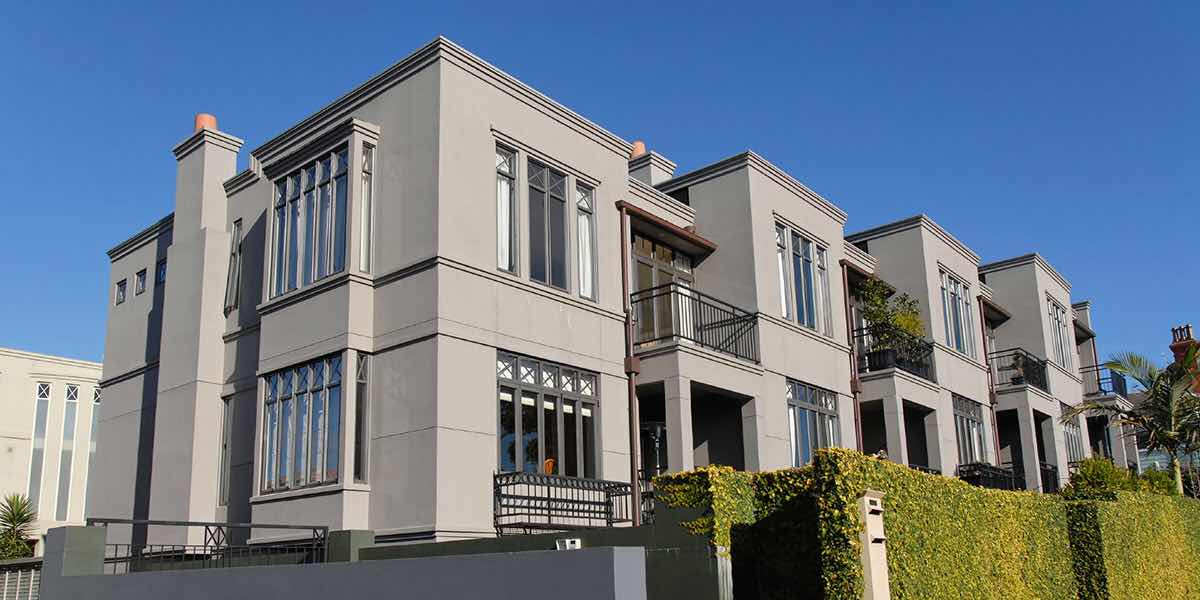
Perhaps the problem wouldn’t have been quite as catastrophic had this not coincided with a fashion for Mediterranean style buildings; houses with complex roofs, plastered exterior walls, internal decks and small or no eaves. These had become all the rage and, now freed from the constraints of a prescriptive building code, architects and builders could get really inventive. The building boom was on and an average of 22,000 homes a year were being built in all manner of shapes, sizes and colours. With home owners’ desire for indoor-outdoor flow, cubism, flat roofs, more and more complicated architectural designs were being produced at an astonishing rate. Unfortunately the building industry wasn’t ready or skilled enough to construct these homes to level of accuracy needed.

The problem lay in the exterior cladding, the skin of the building. Monolithic cladding systems were promoted as being low maintenance and efficient in providing a sealed waterproof outer skin. Such cladding systems typically allowed for little construction or thermal movement so that fine cracks that appeared insignificant, and would have been relatively insignificant in traditional claddings such as weatherboard, allowed continuous ingress of moisture into the framing. These, combined with reduced air movement through the prevalence of sheet cladding or sheet insulating materials for the monolithic look cladding, resulted in very damp conditions which were ideal for rot. 

This would’ve been bad enough, but things were about to get a whole lot worse. In 1995, again from pressure from the building industry, there was a change to the New Zealand Standard for Timber Treatment. This allowed the use of cheaper untreated timber for wall framing. Not a problem if the material didn’t get wet but when placed within leaking monolithic clad buildings the outcome was disastrous. 

It could be argued that the Mediterranean style of building wasn’t necessarily conducive to New Zealand weather conditions. Along with the sunshine, our sub-tropical climate brings high rain and high winds, and in Auckland vertical and horizontal rain. Homes built in the Mediterranean style had features such as recessed windows, flat roofs, minimal eaves, multiple storeys, complex roofs, solid balustrades, balconies and penetrations of the exterior cladding that increased the likelihood of water infiltrating the structure

The lack of teeth in the Act meant that corners were being cut; time wasn’t being spent in the design process, drawings weren’t detailed enough and some builders were unable to make a weathertight structure without proper guidance. Due to the lack of an apprentice scheme, there simply wasn’t enough skills in the New Zealand building industry to construct these complicated homes to a sufficient standard. Equally, Council staff carrying out the building inspections had neither the required construction expertise to ensure weathertightness nor the intuition to look for it.

So the monolithic cladding system’s failed, the untreated timbers became damp and started to rot. Encouraged by the warm and damp, climate, moulds and spores developed within the damp timber framing resulting in building that were too unhealthy to live in. In extreme cases, timbers were so badly decayed that the whole structure became structurally unsound. Beautiful looking, multi-million dollar homes essentially collapsed from the inside out. 

Eventually the Building Act 1991 was replaced by the Building Act 2004, which introduced a licensing scheme for building designers, builders and related trades. Councils were required to be registered with a central authority and were to be subject to regular quality control procedure checks. Interestingly, Council building inspectors remain unlicensed. For the tens of thousands of people who bought homes built between 1990 and 2004 it was cold comfort. The damage had been done and the impacts are still being felt today. 

A government compensation scheme was put in place to help those who were effected but this is only likely to fix around 3,500 of the properties built during that time. The government has imposed a 10 year limit after construction on claims, even though some building experts believe many cases will only become apparent during coming years, as building rot becomes advanced enough. They also warned that houses in drier parts of New Zealand were now starting to show problems, which had simply developed at a slower pace.

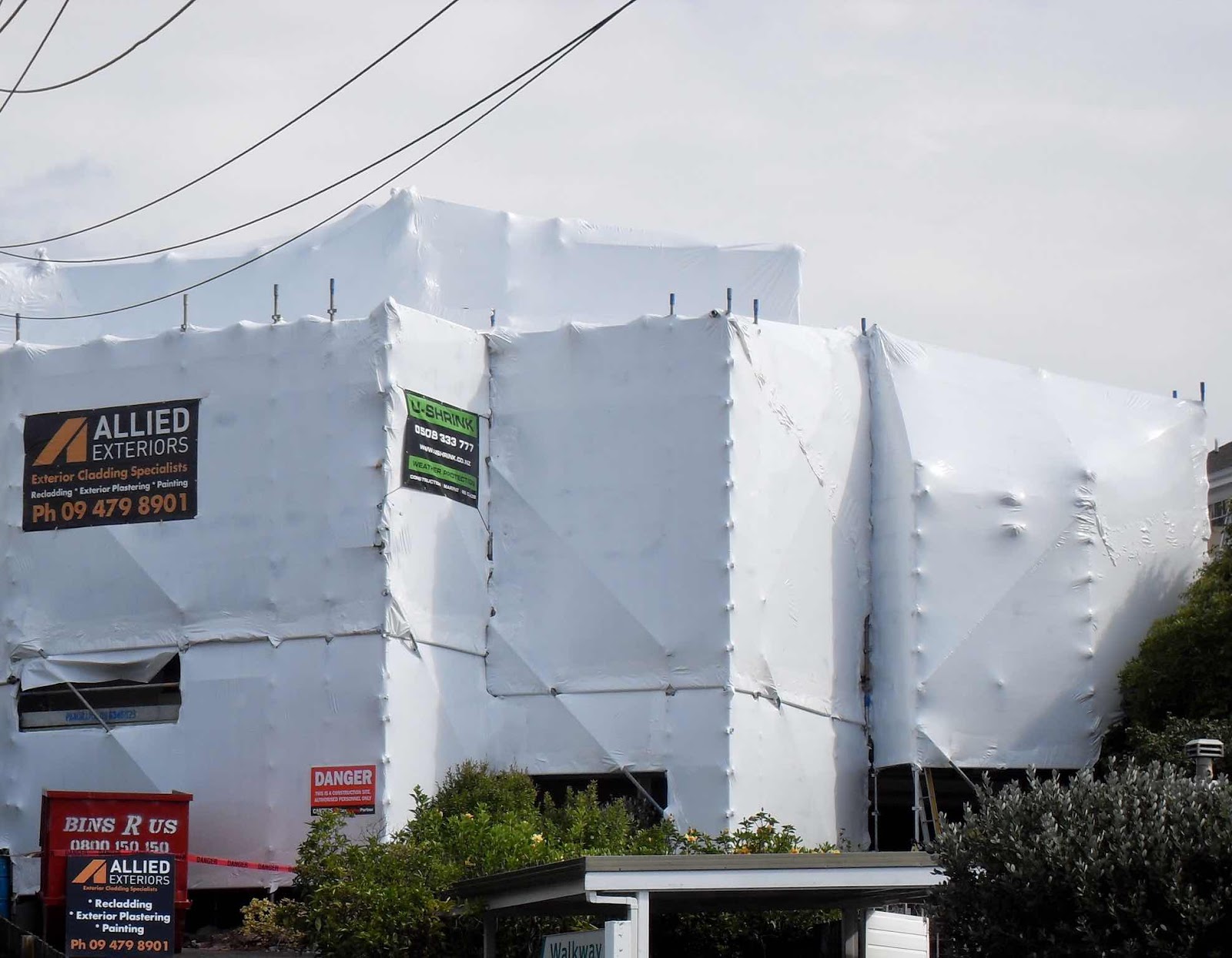
Even today, if you walk around Auckland, you will see buildings wrapped in white plastic. Before reading this blog, you could be forgiven for assuming that they were simply being protected whilst the owners were having the house re-painted. Instead, it’s yet another building being stripped of its cladding and fitted with weatherboards. There was a reason that the traditional New Zealand villas were built with timber weatherboards.

And this all could’ve been avoided had a little more thought been given to the requests of the industry. There was already a perfect example of what might happen on the opposite side of the Pacific. In the 1980s, just ten years previously, British Columbia in Canada had the leaky-condo crisis where, you guessed it, regulations were relaxed and problems emerged with water penetrating the outer skin of building designed in the Post Modern style. Or as some might call it then Mediterranean style.

So the next time you hear an argument to let an industry self-regulate, and indeed are tempted to agree, just consider for a moment what are the potential outcomes? Who is going to benefit and what are the risks? Leaving it to the experts is one thing but what happens when market pressures start to influence decisions? In the end someone has to pay whether it’s the person buying the home or the tax payer burdened with clearing up the mess.


Friday, 3 May 2019

On the Way Home

Calgary Airport, Alberta

3 May 2019

So are New Zealand and Canada similar? I guess in a way they are. Both are relatively new countries with stunning scenery, interesting wildlife and friendly inhabitants who enjoy the outdoor life. But the similarity ends there. Whilst New Zealand has a South Pacific - European feel, Canada leans more towards the US model than I imagine it would dare to admit. And with that comes a totally different outlook and....well vibe. Alas that’s a topic for another day.

In the meantime, we’re heading home with memories of a great trip and some regrets for the things that we didn’t have time to fit in. It’s okay, I’m sure we’ll be back, preferably in the summertime when the trails are open and we can stride out into the mountains without a care in the world....well except for the risk of an encounter with a bear of course. 


Wild Wildlife

Banff National Park

Tuesday 30 April 2019

It’s fair to say that I wasn’t quite as excited to see goats or mountain sheep as my fellow passengers on the train between Vancouver and Banff. Whilst we were genuinely excited to see bears, we couldn’t quite muster the same level of excitement when goats were seen through the train window. People were so excited that the carriage nearly tipped off the rails when all the passengers, bar us, dived to one side to snap a picture of the animal. The goat, in turn, looked rather non-plussed and went about it’s business of eating the snow encrusted grass.

Nope it was bears that we were interested in. Whilst in Tofino on Vancouver Island, we booked on a boat trip to see bears in their natural habitat. And seem them we did. The Captain of the boat, a small six person craft, was fairly certain we would but couldn’t guarantee a sighting. After a quick journey into the inlet, there it was. A male black bear, scouring the shoreline at low-tide looking for food. It felt like a real privilege to watch, whilst we slowly drifted on the water, to see him going about his morning routine of looking for early spring food. Possibly even a second breakfast. 

Later on the trip, as chances of a second sighting were growing dim, we came across a mother and her yearling , again wandering along the coastline looking for food. Amazing stuff. Or at least we thought so.

Later in the trip I was recounting the sightings to an assistant in a Cafe and she noted that she gets them sometimes in her garden during the night as they try to go through the trash. “Wow! I exclaimed, adding “Doesn’t that frighten you?”. “Oh, for sure, she replied, “It makes me think that I’m being burgled.

It wasn’t quite the reason why I thought she should be frightened. I imagine, and I hope that I never find out, that if I were to come across a 250kg hairy mammal in my garden I’d be less worried about getting some of my valuables being stolen and more concerned about my family jewels being removed. 

It was the same when I mentioned later in the conversation that we’d been excited to see a beaver. “Hhhmm, they such a nuisance aren’t they?” came the response, adding “They sometimes dam the river at the bottom of our garden and flood our neighbours.” Deflated I murmured something about being impressed anyway, particularly as they were much better at damming rivers than I was at their age!

So Canada, let’s make a deal. I’m happy to let you get excited about the sight of goats and in return please let me get excited about large mammals. Providing it’s from a safe distance of course!